
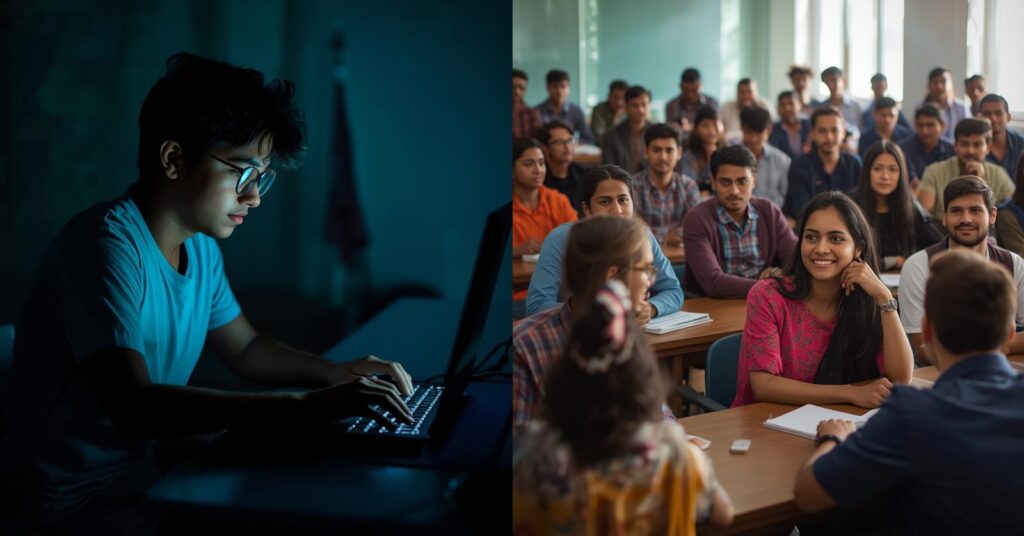
Choosing the right B.Ed in Bangalore is more than selecting a course—it is a strategic career decision that influences your teaching eligibility, salary progression, and long-term professional growth. With increasing competition in private and government schools, aspirants often find themselves deciding between a regular campus-based program and a flexible distance format. While both modes are legally recognized under Indian higher-education regulations, they differ significantly in academic structure, internship exposure, faculty interaction, and peer networking opportunities.
Moreover, factors such as NCTE approval, admission timelines, practicum requirements, and alignment with recruitment cycles must be carefully evaluated before enrolling. Some candidates prioritize immersive classroom training, whereas others require flexibility due to existing work commitments. Therefore, understanding these distinctions becomes essential for making an informed choice. This guide offers a practical, research-backed comparison designed specifically for applicants who are serious about building a sustainable teaching career in Bangalore.
Why Is Bangalore a Preferred Destination for B.Ed Programs?
Bangalore remains one of India’s largest education hubs. Karnataka hosts 1,200+ teacher-education institutions approved by the National Council for Teacher Education (NCTE). According to AISHE 2023–24 data, South India accounts for nearly 30% of teacher education enrollments nationwide.
What Makes Bangalore Strategically Advantageous?
-
Strong ecosystem of CBSE, ICSE, State Board, and international schools
-
Higher teacher recruitment frequency compared to Tier-2 cities
-
Exposure to EdTech-enabled classrooms
-
Internship opportunities across urban and semi-urban schools
Additionally, NCTE guidelines regulate teacher education under the framework defined by the National Council for Teacher Education, ensuring uniform standards across India.
Therefore, the choice is not about validity. It is about learning format, career stage, and long-term goals.
How Do Eligibility Requirements Differ?
| Criteria | Regular B.Ed | Distance B.Ed |
|---|---|---|
| Graduation Requirement | Minimum 50% | Minimum 50% |
| Teaching Experience | Not required | Often required |
| Attendance | Mandatory regular classes | Limited contact sessions |
| Internship | Structured institutional internship | School-based practical requirement |
In Karnataka, several universities mandate entrance exams for regular programs, whereas distance admission often depends on merit and teaching experience.
Is a Distance B.Ed Legally Valid in India?
Yes. However, the program must be:
-
Approved by NCTE
-
Recognized by UGC
-
Offered by a recognized university
According to Ministry of Education reports (2024), more than 18% of teacher education enrollments occur through non-regular modes. Employer acceptance depends on institutional credibility rather than study format.
Which Mode Improves Employment Prospects in Bangalore?
This is where decision-making becomes practical.
Recruitment Trends in Bangalore (2025 Data Estimates)
-
42% of private school recruitments prefer fresh regular graduates
-
36% of hiring decisions prioritize classroom demonstration skills
-
22% focus on subject specialization
However, distance candidates with prior teaching experience often secure mid-level roles faster.
Hiring Criteria in Schools
Recruiters evaluate:
-
Lesson planning ability
-
Classroom management skills
-
Demonstration class performance
-
Subject mastery
Delivery mode ranks lower than performance metrics.
Cost Comparison: Which Is More Affordable?
| Factor | Regular B.Ed | Distance B.Ed |
|---|---|---|
| Tuition Fee | ₹50,000 – ₹1.5 lakh (2 years) | ₹40,000 – ₹90,000 (total) |
| Accommodation | Required if relocating | Usually not required |
| Opportunity Cost | Loss of 2 years’ full-time income | Can continue working |
| Study Materials | Provided physically | Hybrid/online materials |
For working professionals, opportunity cost becomes a decisive factor.
How Does Practical Training Compare?
Regular Mode Practical Exposure
-
Micro-teaching labs
-
Continuous evaluation
-
Structured mentorship
-
16–20 weeks internship
Distance Mode Practical Exposure
-
School-based internship
-
External evaluation
-
Short-term contact workshops
Research by Karnataka State Higher Education Council (2023) suggests regular candidates demonstrate stronger pedagogical confidence during early teaching years. However, experienced in-service teachers show comparable classroom performance after 2–3 years.
What About Career Growth and Salary?
In Bangalore’s competitive school ecosystem, compensation depends more on skill depth and institutional exposure than the mode of study. Data from private and international school hiring trends in Karnataka (2024–2025 recruitment cycles) shows that performance, certifications, and subject demand influence salary progression more than whether the degree was regular or distance.
Salary Structure in Bangalore Schools
| School Type | Entry-Level Salary (0–2 yrs) | Mid-Level (3–5 yrs) | Senior / Lead Roles (5+ yrs) | Key Hiring Criteria |
|---|---|---|---|---|
| Private CBSE/State Board | ₹18,000–₹30,000/month | ₹30,000–₹45,000/month | ₹45,000–₹60,000/month | Subject knowledge, demo performance, classroom management |
| ICSE Schools | ₹22,000–₹35,000/month | ₹35,000–₹55,000/month | ₹55,000–₹70,000/month | English fluency, board familiarity, academic outcomes |
| International Schools (IB/IGCSE) | ₹50,000–₹70,000/month | ₹70,000–₹1,00,000/month | ₹1,00,000–₹1,20,000+/month | IB certification, global pedagogy training, experience |
What Actually Drives Career Growth?
| Growth Factor | Impact on Salary | Long-Term Advantage |
|---|---|---|
| Additional Certifications (IB, Special Education, Montessori) | High | Faster promotions and international eligibility |
| English Communication Skills | High | Access to premium schools |
| Classroom Results & Student Outcomes | Very High | Leadership roles (HOD, Coordinator) |
| Digital Teaching Skills | Moderate–High | Hybrid and smart-class roles |
| Leadership & Coordination Skills | High | Academic head or principal track |
| Mode of Study (Regular vs Distance) | Low (after 3–5 years) | Minimal long-term impact |
Who Should Choose Regular B.Ed?
You may consider regular mode if:
-
You are a fresh graduate
-
You want structured academic mentoring
-
You prefer campus learning
-
You aim for competitive teaching exams
It also benefits those exploring top-tier B.Ed Colleges in Bangalore that provide networking and placement support.
Who Should Choose Distance B.Ed?
Distance programs are suitable if:
-
You are already teaching
-
You require flexibility
-
You cannot relocate
-
You want cost efficiency
Some B.Ed Colleges in Bangalore offer hybrid formats combining flexibility with limited campus exposure.
Decision Matrix: Which Option Fits Your Profile?
| Candidate Profile | Recommended Mode |
|---|---|
| Fresh Graduate | Regular |
| In-Service Teacher | Distance |
| Career Switcher | Depends on schedule |
| Budget-Constrained | Distance |
| Networking-Focused | Regular |
Does Mode Impact Government Teaching Eligibility?
No. Eligibility for:
-
KARTET
-
CTET
-
State Public Service Commission
depends on NCTE recognition, not study format.
How Does Bangalore’s Education Market Influence Your Decision?
Bangalore houses:
-
3,000+ private schools
-
200+ CBSE schools
-
150+ ICSE schools
Recruitment peaks between February and May annually. Therefore, aligning course completion with hiring season increases placement probability.
What Are the Risks to Avoid?
Choosing the wrong B.Ed pathway can delay eligibility, reduce employability, and waste both time and money. While both regular and distance formats are legally valid when approved, certain mistakes repeatedly affect applicants in Bangalore.
Below is a structured risk analysis to help you make a secure decision.
1. Enrolling in Non-Recognized Programs
The biggest risk is selecting an institution without proper regulatory approval.
If the program lacks NCTE recognition or university accreditation:
-
Your degree may be rejected during government job verification
-
Private schools may decline your application
-
You may become ineligible for higher studies (M.Ed, CTET, KSET)
-
Teacher Eligibility Test applications can get invalidated
Always verify approval through official sources rather than relying on advertisements.
2. Ignoring Internship & Practicum Quality
Teaching practice is not a formality. It directly influences hiring decisions.
Risks of poor internship exposure:
-
Weak classroom management skills
-
Lack of real student interaction
-
No documented teaching portfolio
-
Limited recommendation letters
Schools in Bangalore often ask candidates about lesson planning experience and demo teaching. A weak practicum record reduces credibility immediately.
3. Underestimating Teaching Demonstration Importance
Most private and international schools conduct demo classes before final selection.
Common mistakes include:
-
Poor lesson structuring
-
Lack of board work clarity
-
Weak student engagement techniques
-
Limited subject confidence
Your demo performance often matters more than the mode of B.Ed completion.
4. Choosing Purely Based on Low Fees
Low-cost programs may compromise on:
-
Faculty mentorship
-
Academic support
-
Internship partnerships
-
Examination transparency
A slightly higher fee in a reputed institution often delivers better long-term ROI.
Verification Checklist Before Enrollment
Use this practical checklist before paying fees:
-
Confirm NCTE approval number – Cross-check the recognition details on the official NCTE portal to ensure the program is legally valid.
-
Check university accreditation – Verify NAAC grade and UGC recognition status for academic credibility.
-
Review alumni placement data – Evaluate actual employment records and school placements instead of relying only on marketing testimonials.
-
Validate internship tie-ups – Ensure the institution collaborates with recognized schools in Bangalore for proper teaching practice.
-
Understand attendance requirements – Especially crucial for working professionals managing job commitments.
-
Clarify exam pattern and evaluation process – Check internal assessments, practicum marks, and final examination structure.
-
Ask about CTET/KARTET preparation support – Many reputable institutions now provide integrated guidance for teacher eligibility exams.
Careful verification at this stage prevents long-term academic and career complications.
Final Verdict: What Should You Choose?
There is no one-size-fits-all answer—and that’s the honest truth.
If you are a fresh graduate seeking structured mentorship, daily classroom interaction, and stronger peer learning exposure, a regular program may provide the immersive environment you need. It builds teaching confidence through consistent practicum, micro-teaching labs, and faculty guidance.
On the other hand, if you are already working, managing financial responsibilities, or teaching in-service, a distance format offers flexibility without compromising legal validity—provided the program is properly recognized.
Your decision should depend on three core factors:
-
Career stage
-
Financial capacity
-
Learning discipline and time availability
Ultimately, choosing the right B.Ed in Bangalore is about alignment—not trend. When your mode of study matches your long-term teaching goals, both pathways can lead to stable employment, salary growth, and professional respect in the education sector.
Frequently Asked Questions (FAQs)
1. Is a distance B.Ed valid for government teaching jobs?
Yes, a distance B.Ed is valid for government teaching positions if the program holds NCTE approval and UGC recognition. Recruitment boards assess regulatory compliance and eligibility criteria, not the delivery mode, during document verification and final selection processes.
2. Which option is better for fresh graduates in Bangalore?
Fresh graduates often benefit more from regular programs due to structured internships, classroom simulations, faculty mentorship, and peer learning exposure. These elements help build teaching confidence, lesson planning skills, and practical classroom management abilities early in their careers.
3. Can I pursue a distance B.Ed without teaching experience?
Eligibility varies by university. Some institutions require in-service teaching experience, while others admit candidates based on academic qualifications alone. Reviewing official admission guidelines and NCTE norms ensures clarity before applying to avoid rejection or eligibility issues.
4. Does salary differ between regular and distance graduates?
Salary differences are minimal after gaining 3–5 years of experience. Schools primarily evaluate teaching effectiveness, communication skills, subject expertise, and student results. Institutional reputation and additional certifications influence salary growth more than the study format.
5. How do I verify if a B.Ed college is approved?
You can verify approval by checking the institution’s recognition status on the official NCTE website. Confirm the approval number, academic session validity, and affiliating university details to ensure the degree will be legally accepted for employment.